Warning: This post contains unpleasant and horrifying images. Open it at your own risk.
After moving the emperor to Tokyo, the Meiji government started compulsory education in 1886. Issued four years later, The Imperial Rescript on Education (the emperor’s commandments, a Japanese version of Ten Commandments) defined the official ethics for Japanese education—obedience to the emperor and the state.
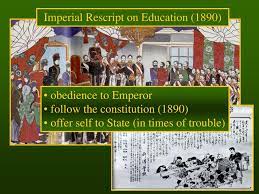
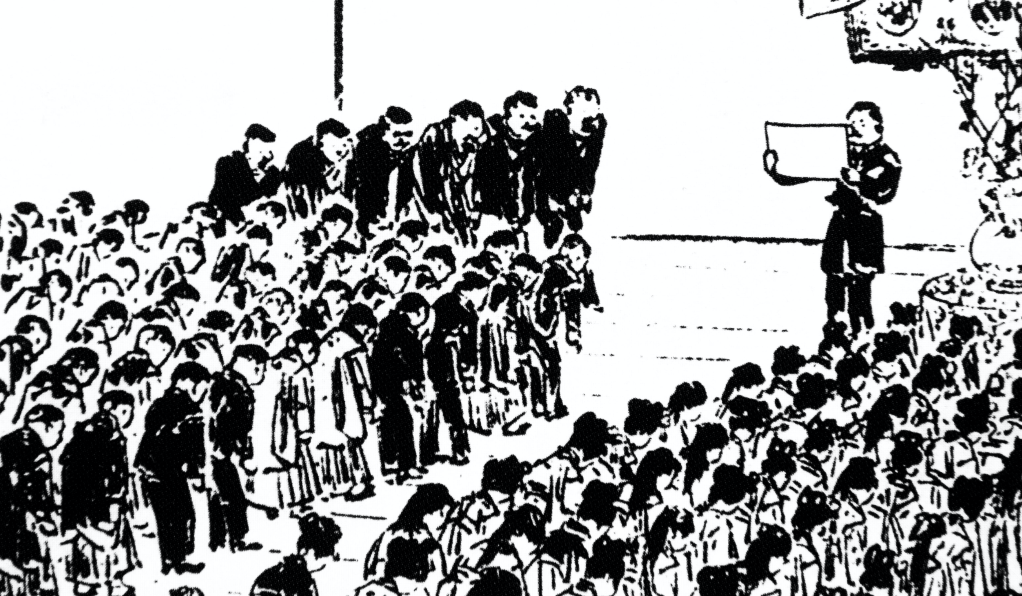
School children learned that they must obey the emperor, follow the constitution, and offer self to Japan. The centralized education had a nationwide influence because standard textbooks were distributed throughout Japan.
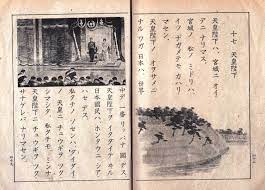
Emperor resides in Imperial House with eternity of the greenness of pine trees. Under the reign of the Emperor, Japan is the greatest country in the world. We are so blessed to have the Emperor. Our ancestors have served the Emperor from the beginning. We also must serve the Emperor faithfully (Elementary school textbook, 1938)
The reign of the emperor is a typical lie of State Shinto. The emperor never said, “Japan is the kingdom of gods” or “Japanese ancestors served the emperor from the beginning.
Before Meiji Restoration, The Japanese had been loyal to the Shogun, feudal lords, and samurais, NOT to the emperor.
State Shinto deliberately created “new stories” for emperor worship by ignoring the past.
As Shinto had no written scriptures, State Shinto had freedom to create its own truth and justice with half-truth and blatant lie. The copied Christian principles promoted the sense of Japanese as a god-chosen people.
1) the emperor is the son of Amaterasu Ohmikami (the creator of Japan), 2) Japan is the sole kingdom of gods and superior as the light of the world, 3) Japanese are the children of Japanese Jesus Christ, 4) the reign of the emperor is eternal, 5) Japanese ancestors served the emperor from the beginning.
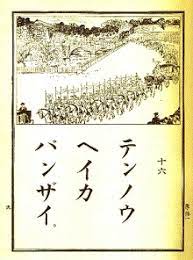

While children learned the honor of obedience to the emperor, The Imperial Rescript to Soldiers and Sailors (the ethics for military personnel, another emperor’s commandments) taught soldiers the honor of dying for the emperor.


An enemy bullet hit Soldier Kohei Kiguchi, but even in death, his bugle never fell from his mouth. (Fist grader textbook, 1918)
The Imperial Rescript strengthened the personal bond between soldier and emperor. Japanese soldiers were made to think and act according to the Japanese identity as ”the child of the emperor.”
The soldiers followed a State Shinto pattern of thinking and reacting. Disobeying the emperor can lead to a loss of Japanese identity. Death was better than getting detached from the emperor, the state, and family.
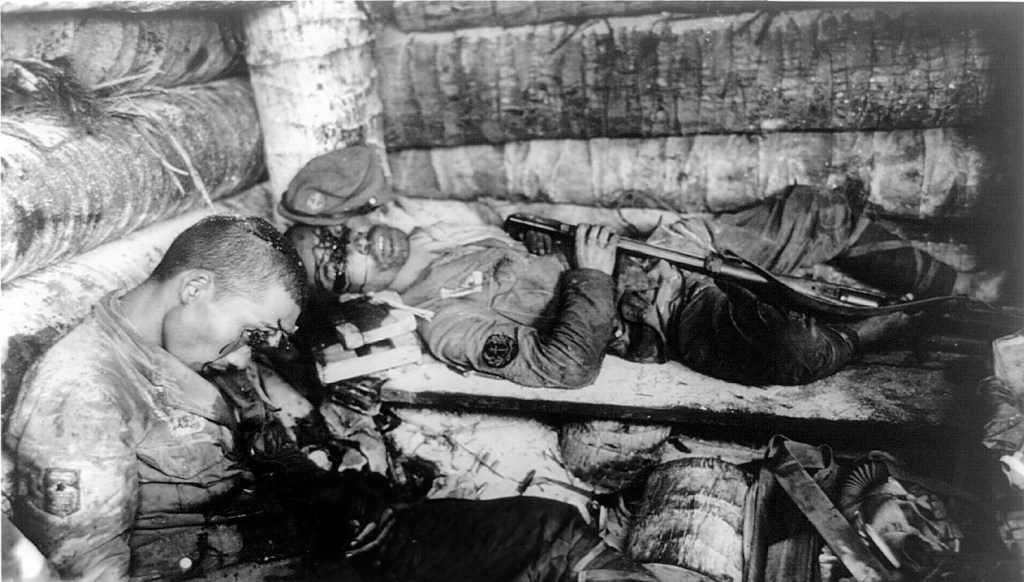
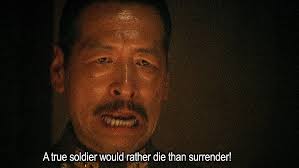
The German soldiers did not believe that they were the child of Adolf Hitler.

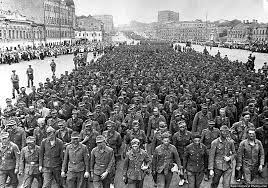
Disobeying Hitler did not lead to a loss of German identity. After surrendering, they maintained a sense of human being attached to their country, families, and friends.
A Japanese soldier was conditioned to unquestioningly obey the will of those who had authority over them, even at the expense of his life. Performance of duty was more important than human life.
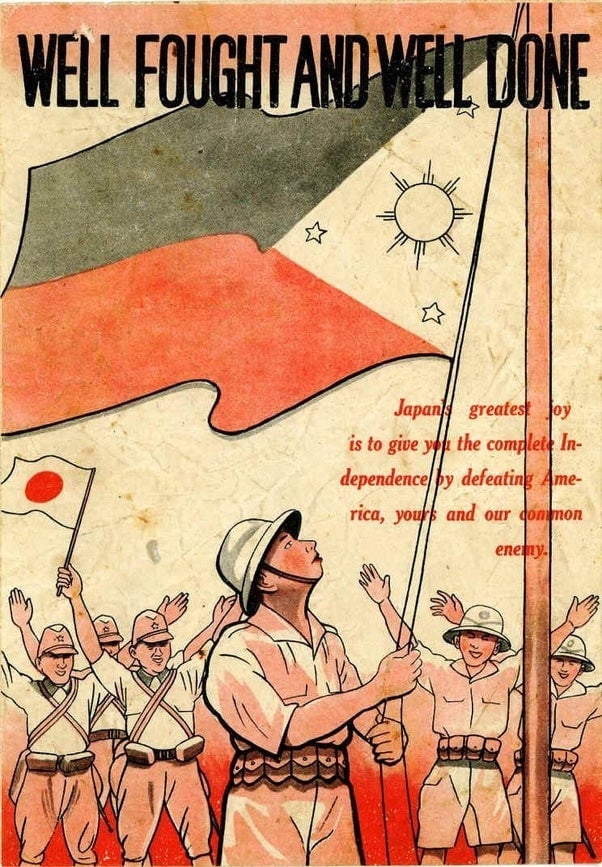
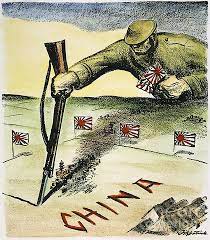
Japan’s greatest joy is to give you the complete independence by defeating Americans, yours and our common enemy.
State Shinto claimed that Japanese people were fighting a total war to liberate Asians from European nations. With censorship of the media and education, the state religion skillfully diverted Japanese attention from the reality of Japanese aggression.
The militarists who had led Japan into war had used this religion to further their war efforts, and the state still subsidized it (Douglas MacArthur, Reminiscences, p311)
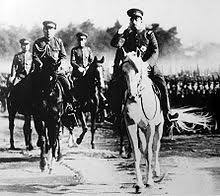
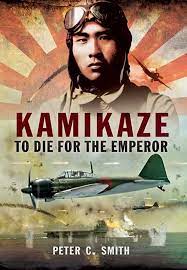
In this spiritual climate, the emperor masqueraded as god. Disobedience was regarded as betrayal to the emperor, the state, and Japanese people.
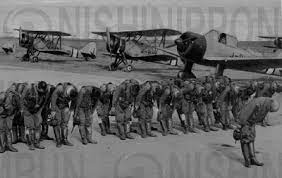
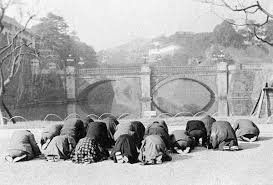
The power holders of Imperial Japan used this religion to deceive Japanese into believing in Japanese Jesus Christ. Under government propaganda, Japanese people were unable to discern the lies of State Shinto.
The Emperor was considered a divine being, and the average Japanese subject dare not even lift up his eyes to view his ruler. The God-Emperor was absolute. His word was final (MacArthur, Reminiscences, p284)
Education of emperor worship was such a long-term process that an average individual was unable to perceive the process of thought control as a consistent and willful effort.
 Spiritual War in Japan
Leave a comment