The Imperial Rescript on Education 1890 provided a moral standard to teach loyalty to the emperor and the nation. Based on Shinto, the Meiji government replaced an old loyalty to the Shogun with a new loyalty to the emperor.
During the westernization of Japan, Japanese education did not accept the Christian values of freedom, truth, and justice. As Japan traditionally values group conformity more than individual freedom, Japan persistently neglects the human rights of school children.
The Imperial Rescript on Education (the emperor’s commandments) safeguarded Japan’s traditional values in the wake of Westernization, modernity, and Christianity. The Rescript standardized patriotic education, and the centralized education prepared people for militaristic efforts.
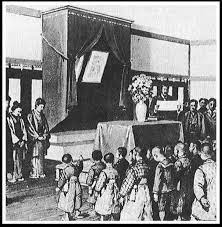
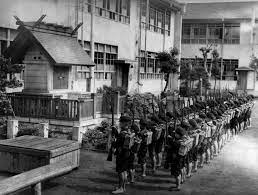
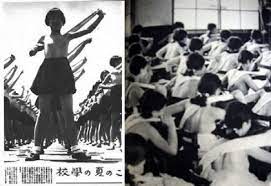
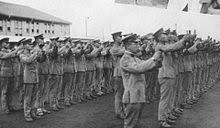
Emperor worship and loyalty to the nation were promoted as military virtues for children and soldiers. State-run education declared any objections as “enemies of people.”
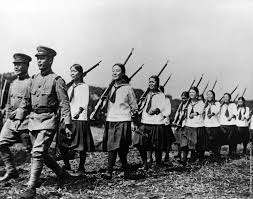
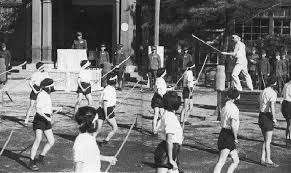
Military trainings became a holy duty for children at school.
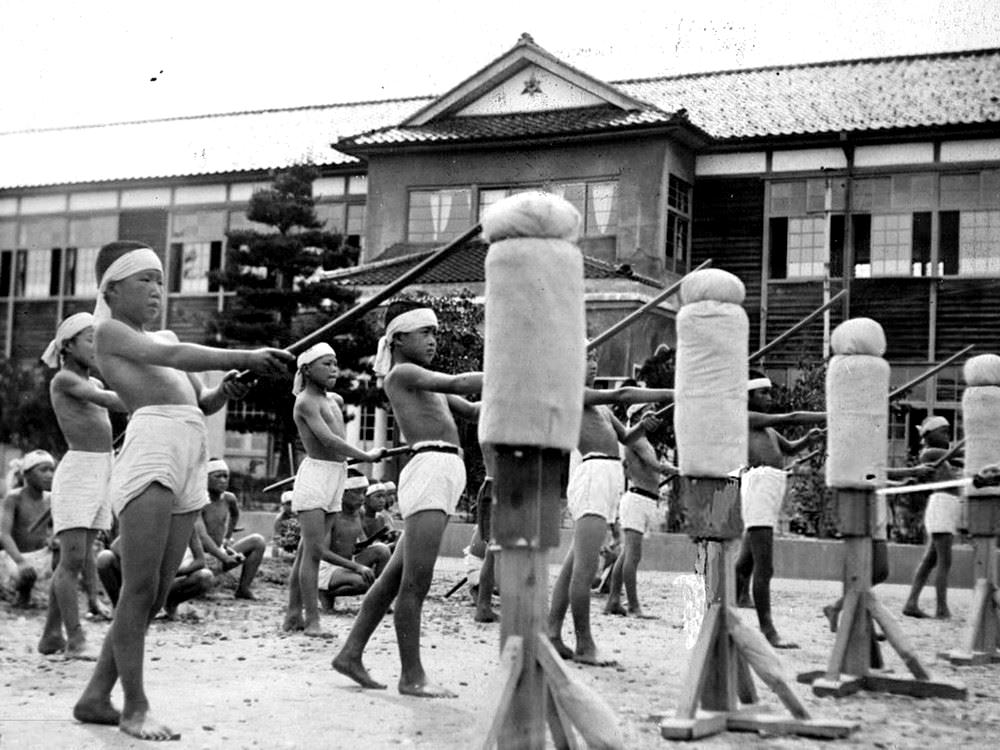
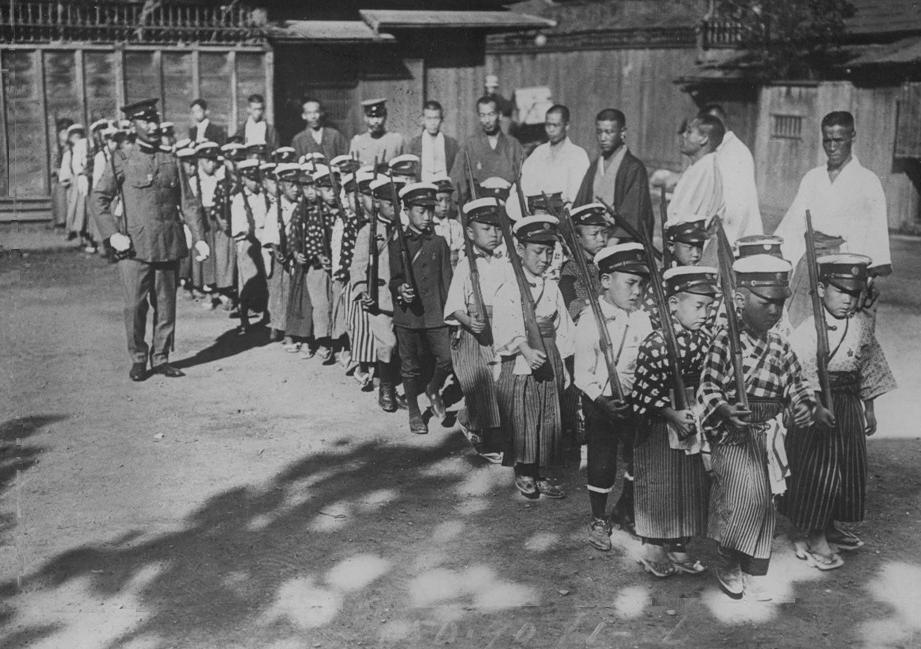
As Japan’s government became increasingly militaristic from 1912-1937, the Imperial Rescript to Soldiers and Sailors became compulsory reading for students. The students memorized the Imperial Rescript like a soldier.
The militaristic education was abolished when Japan surrendered in 1945. However, the tradition of state-run education persisted into Postwar Japan, denying the human rights of children.
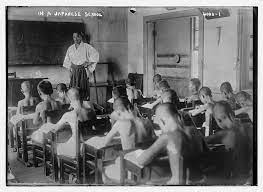
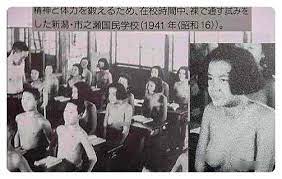
Group conformity is the highest value of Japan. Children are still trained to rigidly conform to those who have authority over them, instead of learning good and evil. Questioning and talking back to authorities are cleverly prohibited in school.
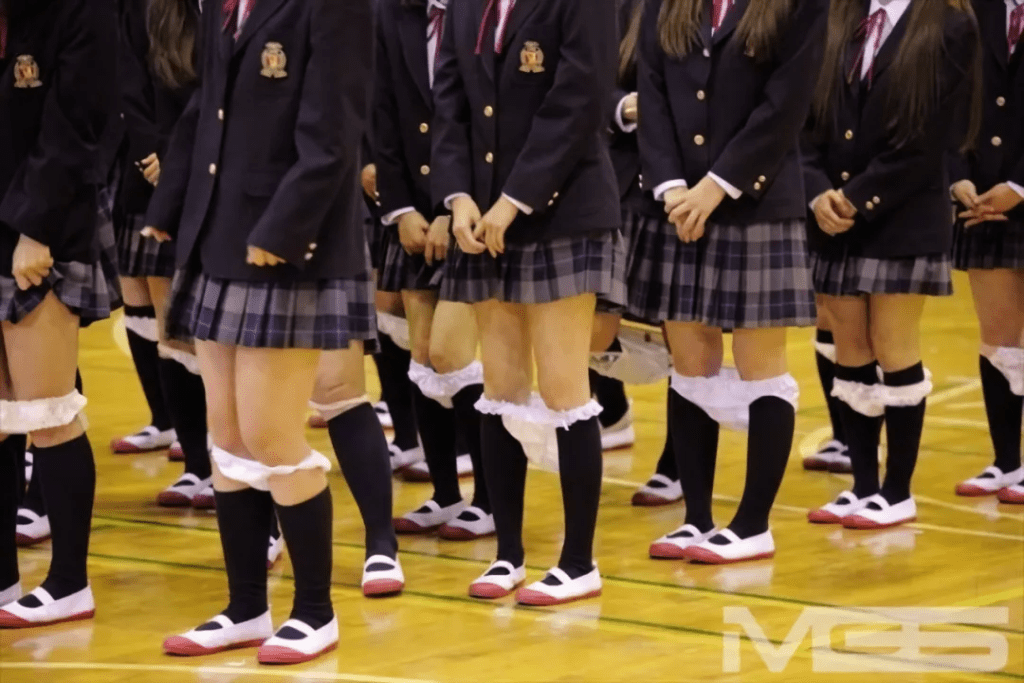
Some schools ensure rigid conformity in virtually every aspect of life. The students are inspected by teachers to see if they’re wearing white underwear.
A study conducted in the nearby city of Fukuoka last year found more than 80 per cent of its schools had rules on the colour of students’ underwear. The report found some students were made to remove their underwear at school if they were the wrong colour. Citing the strict disciplinary action students could face if they broke the rules, the report’s authors said their treatment was an ‘infringement of human rights’.(By CHARLIE COË FOR DAILY MAIL AUSTRALIA, 30 March 2012)
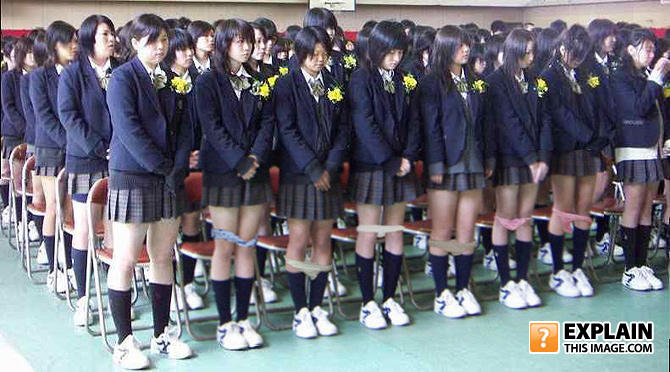
One girls’ high school in Tokyo checked on students to see if they were wearing the regulation underwear. Those with polka-dot or colored panties, instead of standard white, were forced to stand at the front of the class while the teacher denounced them having the “mentality of bar hostesses.” (Ken Schoolland, Shogun’s ghost: the dark side of Japanese education, p24)


Much of this regimentation is focused on the most trivial details of dress and behavior.
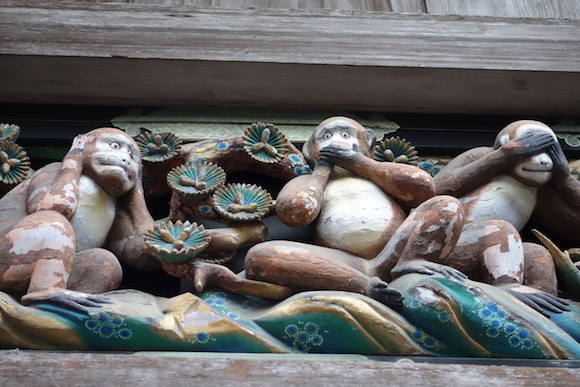

Most of Japanese parents do not respond the problem of evil in school (child abuse) because they culturally see no evil, hear no evil, and speak no evil. They have been programmed to obey Japan’s authorities.
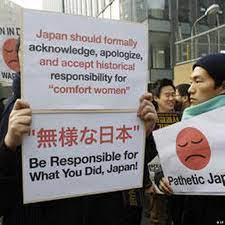

Japanese teachers should formally acknowledge, apologize, and accept historical responsibility for the Controlled Education.
A child abuse in school persists because abusive teachers are not punished legally.
When a crime is not punished quickly, people feel it is safe to do wrong. (Ecclesiastes, 8:11)
 Spiritual War in Japan
Leave a comment