By the year of 1980, Japan had revived as the world’s second largest economy. The country now needed “corporate warriors,” instead of soldiers, because the power holders of Japan wanted to keep its lead in the world economy.

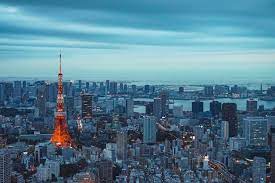


In Postwar Japan, corporatism dominated the political and social life of the nation. Japan’s national goal had been changed from “Rich country, strong army” to “Rich country, strong corporations.”
After Japan accomplished the Economic Miracle in the late 1970s, there was a belief “if Japan is to keep its lead in the world economy, our young people must learn discipline and they have to be toughened for the rigors of competition.” (Chicago Tribune, 11/08/88)
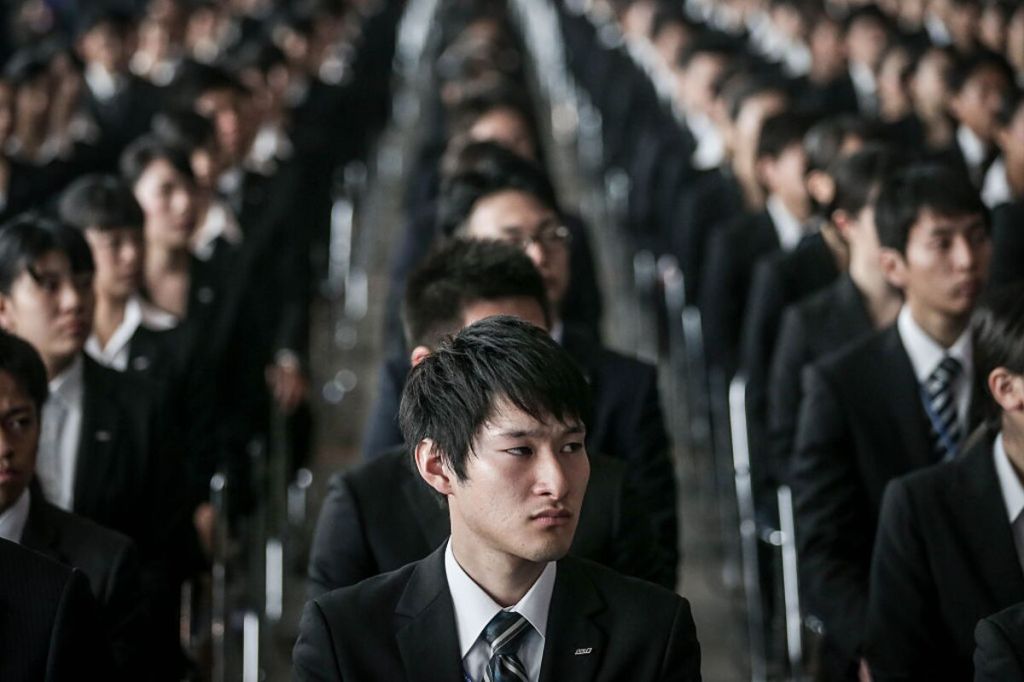
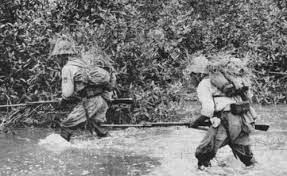
This belief is equivalent to that of Meiji leaders: “If Japan is to keep its lead in the Western Colonialism, our young people must learn discipline and they have to be toughened for the rigors of war.”
In the 1980s Japan’s education became increasingly authoritarian, militaristic, and sadistic in schools. This education was called “The Controlled Education (kanri shugi kyoiku, 管理主義教育)” which promoted rigid conformity in every aspect of life and absolute obedience to authority.
Sadistic practices of teachers took on imaginative forms. Children were not allowed to make mistakes.
An elementary school teacher discovered that eight boys and five girls had forgotten to bring their books and calligraphy materials to class. As punishment for forgetfulness, all these children were forced to remove their skirts and pants in class. After an hour in the cold November weather, they were finally allowed to put their clothes on (“Extreme Lesson in Forgetfulness,” Mainichi Daily News, 12/5/1988).
Violence at the teachers’ hands were justified in the name of discipline. The names of abusive teachers were withheld from the newspapers.
A teacher (age 44) of student guidance hanged a high school student (age 17) upside down from a toilet window on the third floor. The student was punished for smoking. After the incident was disclosed, the student’s parents made no protest to school, and the student was transferred to another school. The teacher apologized, saying “I overdid it.” This incident happened at Higoyama High School, Kyoto. (Asahi News Paper, 5/29/85)
Beginning in the 1980s, students were brutally punished for violating a minor rule. The other teachers passively observed the punishment, and most parents did not protest to school.
A young teacher (age 24) hit about one hundred fifty 8th graders with a bamboo sword. He made the students kneel on the floor in line and hit them one by one on the back. The reason for corporal punishment was the sudents had long hair against the school rules. Most were female students and complained of pains in the back. Some received one-week medical treatment…The incident happened when four hundred sixty 8th graders were gathered at the gym for clothing inspection. The teacher said, “Anyone whose forehead hair bangs temples step out.” Those stepping out were ordered to sit on knees, and the teacher hit the students with his bamboo sword. The other teachers all observed the punishment passively (Asahi News Paper, 5/29/85)

Under the Controlled Education, Japanese students were treated the same as the Allied Prisoners of War at Japanese camps. Students and POWs were severely punished for violating a minor rule or not doing as they were told.

Grim-faced men look on helplessly from the roll-call as a prisoner who had been given a”beating up” by a guard is carried away. He had failed to “number” in Japanese. Sketch by Ronald Searle. (Surviving the Sword, Imperial War Museum)
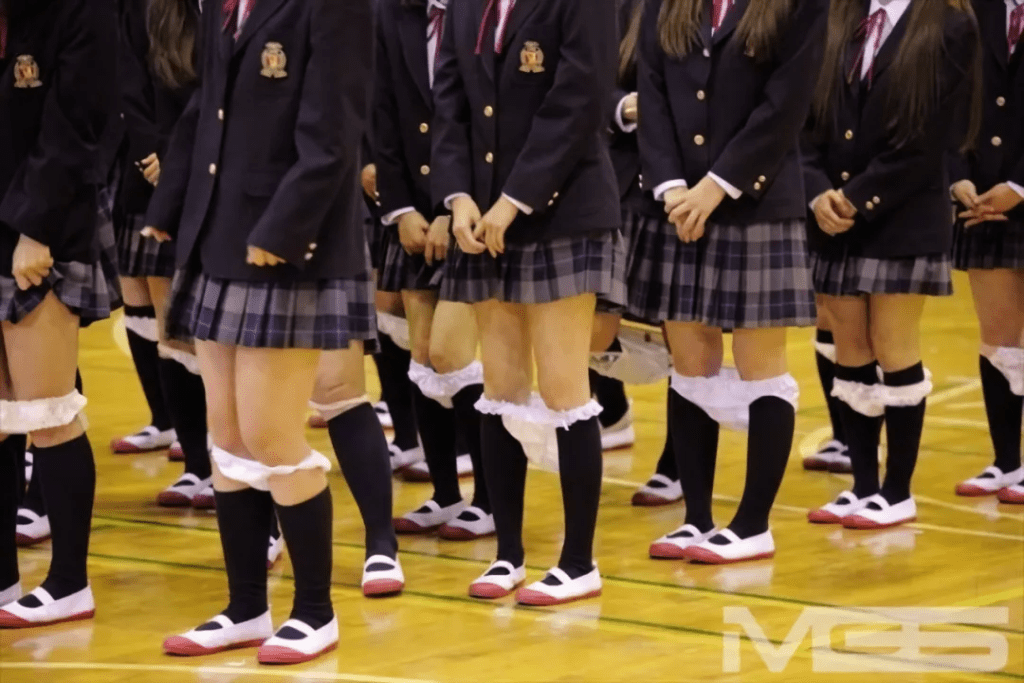
Chicago Tribune, American newspaper, describes the revival of cruelty of Japan’s wartime military in Japanese schools (Chicago Tribune, 03/23/94).
“It reminds me of Japan’s wartime military,” said Susumu Nakano, a former high school teacher who lectures in education at Chuo University, referring to brutal behavior that was taken for granted in the militaristic period before and during World War II.“

Mistreatment of students continues because in Postwar Japan, Japanese corporatism dominates not only the government, but also its society.
Under the policy of “Rich Country, Strong Corporations,” schools teach children absolute, unquestioning obedience to authority.
The Controlled Education is equivalent to the education of State Shinto 1880-1945 that had taught children and soldiers “absolute obedience to the emperor.”
 Spiritual War in Japan
Leave a comment