Under the Controlled Education, Postwar Japan glorified “hot-blooded teacher” who resorted to cruel punishment in trying to keep students in line. In the 1980s and 1990s, educating disobedient and rebellious students led to the death of students.
A student killed for using a hairdryer: In 1985, Kazunori Amamori, a high school teacher, killed his student who used a hairdryer on a school trip. The student was beaten to death because he refused to apologize for his “crime” of using a hairdryer.
Toshinao Takahashi was a second-year student at Giyo Senior High School on a school trip to the Tsukuba Expo near Tokyo. At the hotel where the group was staying, Takahashi had been caught breaking a school rule that forbade the use of electric hairdryers. Kazunori Amamori, the teacher on duty, summoned Takahashi to have him apologize for this infraction. With the students looking on, Amamori scolded Takahashi, but the boy showed no remorse and refused to apologize. This enraged the teacher, and he started beating Takahashi on the head and kicking him in the stomach. The boy dropped to the ground and, kneeling in front of his teacher, attempted to apologize. But the kicking and punching continued until the boy fell unconscious. Takahashi was taken to the hospital where doctors reported that he died of head and stomach injuries and shock.
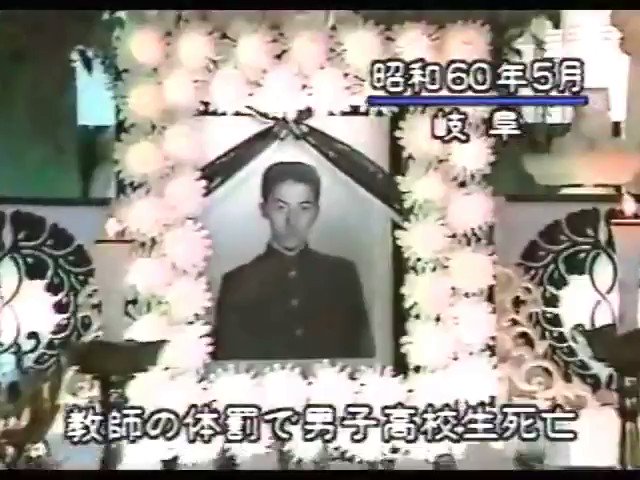
A court, Ibaragi, Tuesday sentenced a former high school teacher to three years in prison for causing the death of a student through corporal punishment…the judge pointed out that at Giyo High School, there were tendencies among teachers to approve physical punishment and that Amamori had been criticized by other teachers for being lenient with students. (Japan Times, 3/19/86)
Amamori said, “My fellow teachers taunted me with being soft. I had no alternative but to physically punish the student.” Before this incident Amamori had never advocate nor used corporal punishment. (Japan Times, 02/20/86).
In society where people do not know God’s standard, they twist justice as they wish. Without knowing true justice, they blame the innocent victim and support the wicked abuser.
A high school girl, Fukuoka Prefecture, died at the hospital after she was beaten incessantly by her teacher. The girl wore a skirt longer than the school standard. The teacher noticed it and told her to correct it accordingly. But she showed no remorse and refused to change the length of the skirt. This made the teacher furious. He knocked her down in the classroom, dragged her to the corridor, and punched her face, and hit the back of her head on the window frame. The girl pushed the teacher to escape his violence. This resistance enraged the teacher more. He gripped her hair and pounded her head against the concrete pillar. She fell unconscious and died at the hospital the next day.
After the incident, the colleagues and graduates sympathized the teacher and started a signature-collecting campaign calling for sentence reduction. They collected over 75000 signatures. The local people supported the idea that the girl was to blame, the teacher was a victim. (Incidents and crimes in schools: part 2, 1986-2001, Hihyo-sha, 学校の中の事件と犯罪2、1986-2002, 批評社)
Takahashi and the girl were killed in the same way as the atrocities of Japanese soldiers. These injustices were not acknowledged because Shinto has no concept of sin. Nobody discerned that the Controlled Education is a school version of Rape of Nanking.
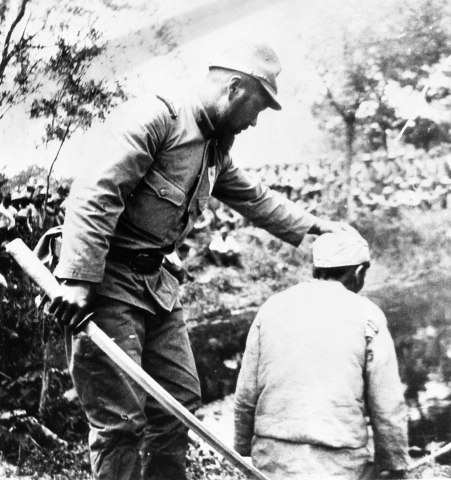
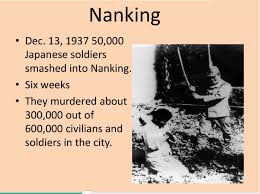
With no knowledge of God’s justice and truth, Japanese are unable to understand human rights, individual freedom, and the sense of democracy.
Under the rigid vertical social structure, power is everything….When I think of these social injustices and behavioral problems, I wonder whether we are lacking some of the fundamental principles on which modern civilization has been built. What are they?
Perhaps, they are human rights, individual rights, the sense of freedom, the modern philosophy of democracy and so on .We Japanese never acquired these essentian principles by ourselves but were given them as a result of the last war. Modern society was built by many people’s blood shed in the revolutions mentioned above. We did not shed our blood for such principles in our history. As the proverb says, “easy comes, easy goes.” (Japan Times, Readers in council, 1/2/86)
God waits for Japanese repentance on war crime.
And I will give you a new heart, and I will put a new spirit in you. I will take out your stony, stubborn heart and give you a tender, responsive heart. (Ezekiel 36: 26)
 Spiritual War in Japan
Leave a comment